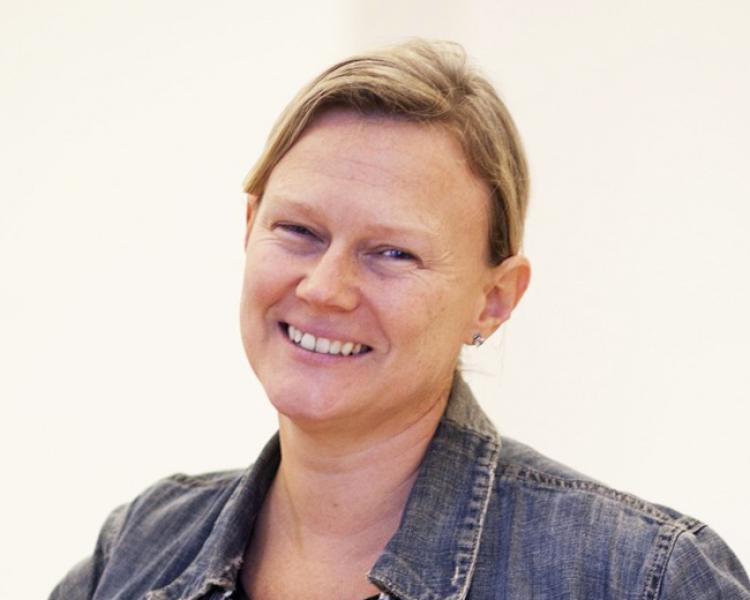
We are immensely grateful for the effort and leadership provided by our Faculty Directors.
Dr. Erik Wibbels
Faculty Director, CURF
Erik Wibbels is the Presidential Penn Compact Professor of Political Science and Co-Director of PDRI/DevLab@Penn. His current major projects include research on the human impact of US deportations of Central Americans; studies on the impact of refugees on social cohesion in Kenya and South Sudan; the Machine Learning for Peace project, which measures and forecasts dynamics in civil society at high frequency; and an attempt to use NLP to measure social and political responses to climate change around the world.
In his role with PDRI/DevLab@Penn, Wibbels also works with governments, international donors, and their implementing partners to improve the design and evaluation of development programming and engage in policy-relevant research around the world. His lab is currently leading an initiative with the World Bank, International Office of Migration, UNHCR and others to understand the impact of refugees and displaced populations on the communities and politics of the places they arrive. As part of its educational mission, PDRI/DevLab works with Pre- and Post-Doctoral Fellows, Ph.D., MA, and undergraduate students through a combination of applied research, internships, and coursework.
Dr. Wibbels' Faculty Site
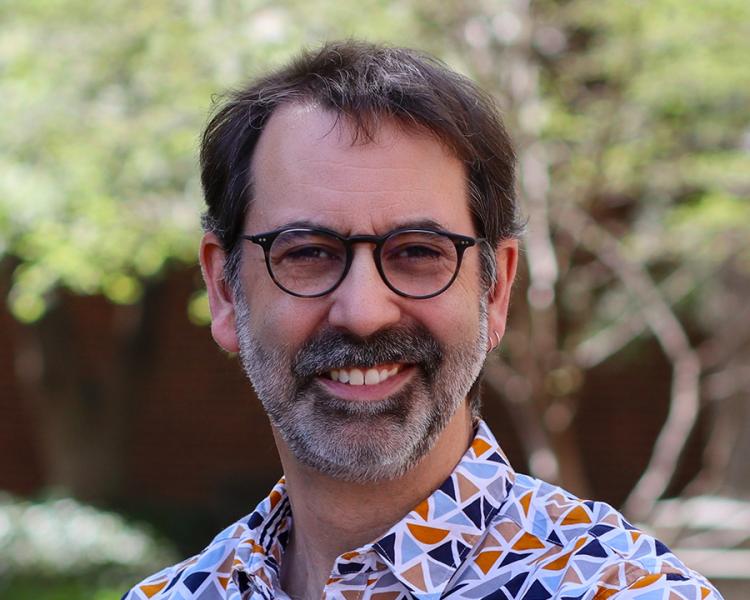
Dr. Alain Plante
Faculty Director, University Scholars
Alain Plante received his Ph.D. in Soil Science from the University of Alberta, in Canada. His research interests lie in the field of terrestrial carbon biogeochemistry, soil science, ecosystem ecology, environmental science and global change. He teaches a large introductory course in environmental science, and courses in soil science, biogeochemistry, and the Anthropocene. Prof. Plante is increasingly curious about the contributions of methods of knowledge generation outside of science to environmental problems, and completed an MPhil degree program in 2024 in the field of environmental humanities. As Faculty Director of the University Scholars, Prof. Plante seeks to foster a passionate fellowship of undergraduates interested in conducting research in any filed spanning the humanities, social sciences and natural sciences in all of the undergraduate schools. He helps direct programming through the academic year, coordinates the applications process into the program, and the funding of summer research projects.
Plante LabDr. Kimberly Bowes
Faculty Director, Benjamin Franklin Scholars
Kimberly D. Bowes is an American archaeologist and professor of Classical Studies at the University of Pennsylvania. She specializes in archeology, material culture and economics of the Roman and the later Roman world. Bowes obtained her Bachelor of Arts at Williams College in 1992 and a Masters of Arts with distinction from the Courtauld Institute of Art in 1993. She was a visiting fellow at Harvard University in 2001, completed her PhD at Princeton University, and began her career as a postdoctoral fellow and lecturer at Yale University in 2002. Prior to beginning at the University of Pennsylvania in 2010, Bowes taught at Fordham University (2004–2007), Cornell University (2007–2010), and the American Academy in Rome (2012–2014). She has previously served as the director of Integrated Studies Program, a freshman-year intensive liberal arts course for the Benjamin Franklin Scholars at the University of Pennsylvania.
From 2009-2015, Bowes co-directed the Roman Peasant Project in Italy with colleagues. The Project was the first systematic study of the lifestyles and experiences of Roman peasants in Italy, and was supported by the National Science Foundation, the Loeb Foundation and the Penn Museum. The final two-volume publication, The Roman Peasant Project 2009-2015: Excavating the Roman Rural Poor, was published by the Penn Museum and University of Pennsylvania Press in February 2021. She is currently writing a book on poor economics for the Roman empire. Tentatively entitled, Getting by under the Roman Empire: An Economic History of the 90%, the volume offers a critique of growth-centered, top-down models of Roman economic history, and posits in their place a series of household-level studies, grounded in new work in development economics, that interrogate the opportunities and stresses experienced by working people.
Dr. Bowes' Faculty Page